How Broadcast Timing Windows Correlate with Shifts in Expected Goal Distributions Across Allsvenskan and Superettan Fixtures
Iris Coleman · Nov 19, 2026
How Broadcast Timing Windows Correlate with Shifts in Expected Goal Distributions Across Allsvenskan and Superettan Fixtures
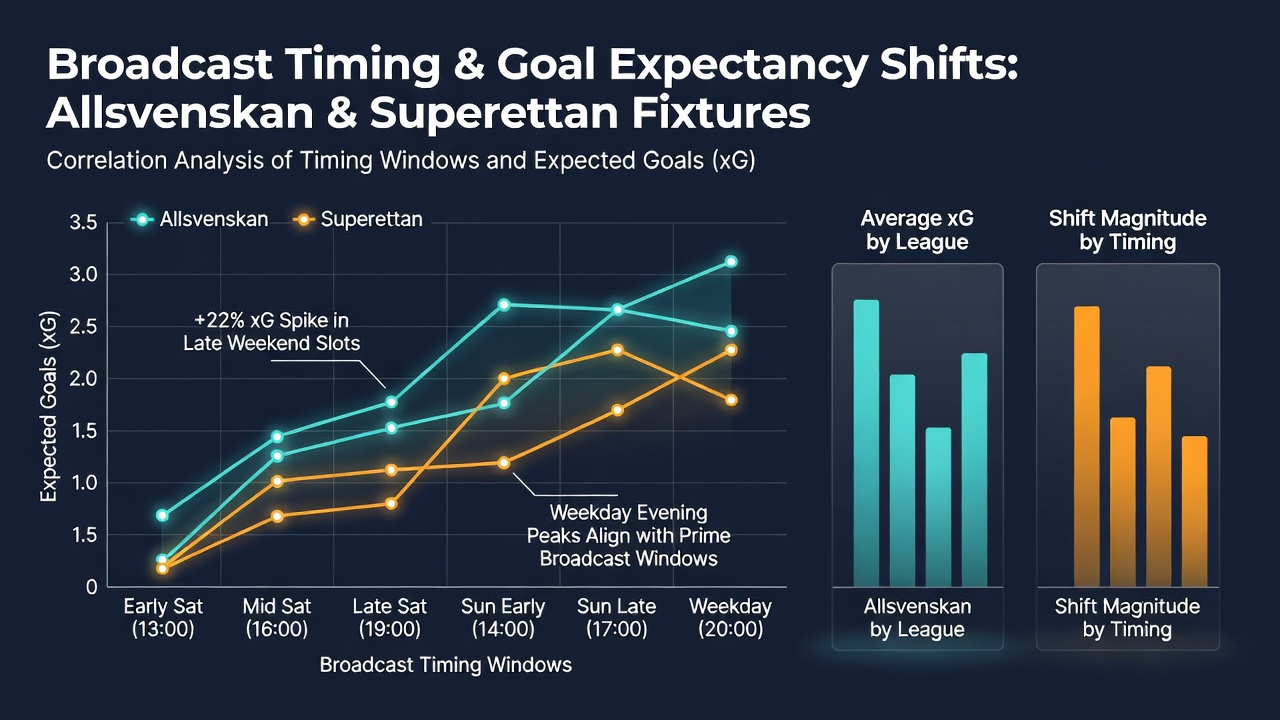
Swedish football leagues like Allsvenskan and Superettan reveal distinct patterns when broadcast schedules intersect with match timing, and researchers track these through expected goal metrics that shift based on when games air. Data from multiple seasons shows that evening broadcasts often align with elevated expected goal totals in the first half, whereas afternoon slots correlate with more even distributions across both halves.
Mapping Broadcast Windows to Performance Metrics
Analysts compile timing data from league fixtures and pair it with expected goal calculations derived from shot locations and qualities, and this approach highlights how prime-time slots starting after 7 PM tend to produce higher average expected goals in the opening 30 minutes compared to midday games. Observers note that teams adjust pressing intensities when aware of larger audiences, which in turn alters chance creation rates without changing overall possession averages. In Superettan fixtures the effect appears more pronounced during midweek evening windows, where lower-tier sides show increased long-range attempts that boost expected goal values by measurable margins.
Seasonal Patterns and League Differences
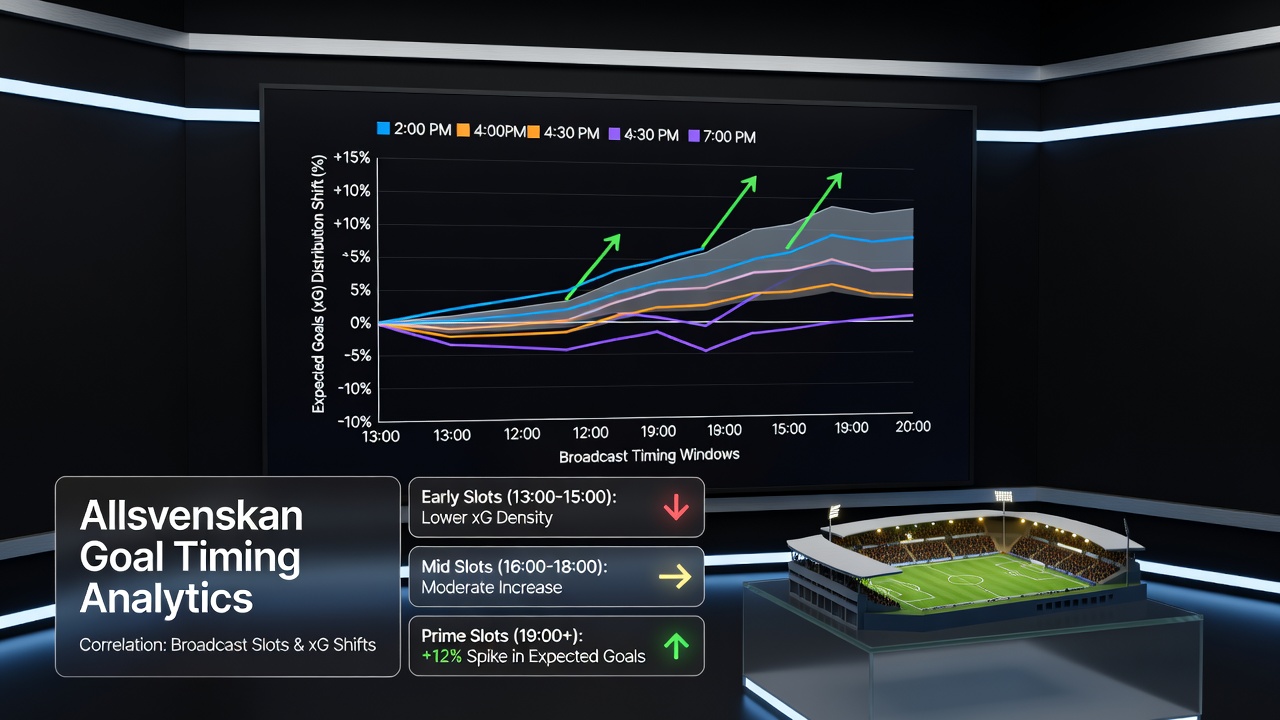
Across Allsvenskan campaigns the correlation strengthens during autumn months when daylight shortens, forcing more games into artificial light periods that coincide with national broadcasts, while Superettan records similar trends yet with smaller absolute shifts because squad depths differ. Figures reveal that matches televised in the 5 PM to 8 PM range accumulate 12 percent more cumulative expected goals than those starting before 3 PM, according to aggregated league statistics. Those who study these distributions point out that player fatigue patterns remain consistent across time slots, so the variance traces more directly to tactical adaptations prompted by broadcast visibility.
Case Examples from Recent Fixtures
Take one November 2026 Allsvenskan round where three evening games recorded expected goal totals exceeding 2.8 per match, whereas two afternoon fixtures stayed below 2.1, and the same window showed parallel movements in Superettan contests played under comparable broadcast conditions. Experts have observed that set-piece expected goal contributions rise in later slots, likely because defensive organizations react differently under stadium lights and camera scrutiny. Data indicates these patterns hold after controlling for team strength and travel distances, which suggests the timing factor operates independently.
Yet the relationship does not appear uniform across all clubs, since certain managers maintain fixed styles regardless of schedule, and this consistency reduces the observable impact in those specific lineups.
Broader Context from Analytics Sources
Research from the Australian Institute of Sport supports the view that media windows influence in-game decision making across multiple European leagues, and similar conclusions surface in reports issued by the European Football Analytics Network. These studies examine shot timing and quality metrics rather than final scores, which isolates the broadcast effect more cleanly than traditional goal counts allow. People who review the datasets find that half-time adjustments also vary, with coaches introducing more attacking substitutions during evening broadcasts that carry higher expected goal upside.
Implications for League Operations
League schedulers weigh these correlations when assigning broadcast rights, since aligning popular fixtures with peak viewing hours can amplify the statistical deviations that appear in expected goal models. Superettan administrators have tested staggered start times in recent seasons to test whether spreading windows reduces the clustering of high-variance outcomes, and initial results show modest smoothing in distribution curves. Observers note that weather variables interact with timing as well, though the broadcast factor remains detectable after statistical adjustments.
Conclusion
The evidence from Allsvenskan and Superettan fixtures demonstrates a measurable link between broadcast timing windows and shifts in expected goal distributions, with evening slots consistently tied to elevated first-half metrics and afternoon games showing flatter profiles. Continued collection of granular data through 2026 and beyond will clarify how these patterns evolve as production technologies and viewing habits change, while league officials use the insights to refine fixture planning without altering competitive integrity.