How Accumulated Points from Opening Fixtures Inform Later-Season Goalscorer Odds in Allsvenskan
Elena Griffin · Sep 10, 2026
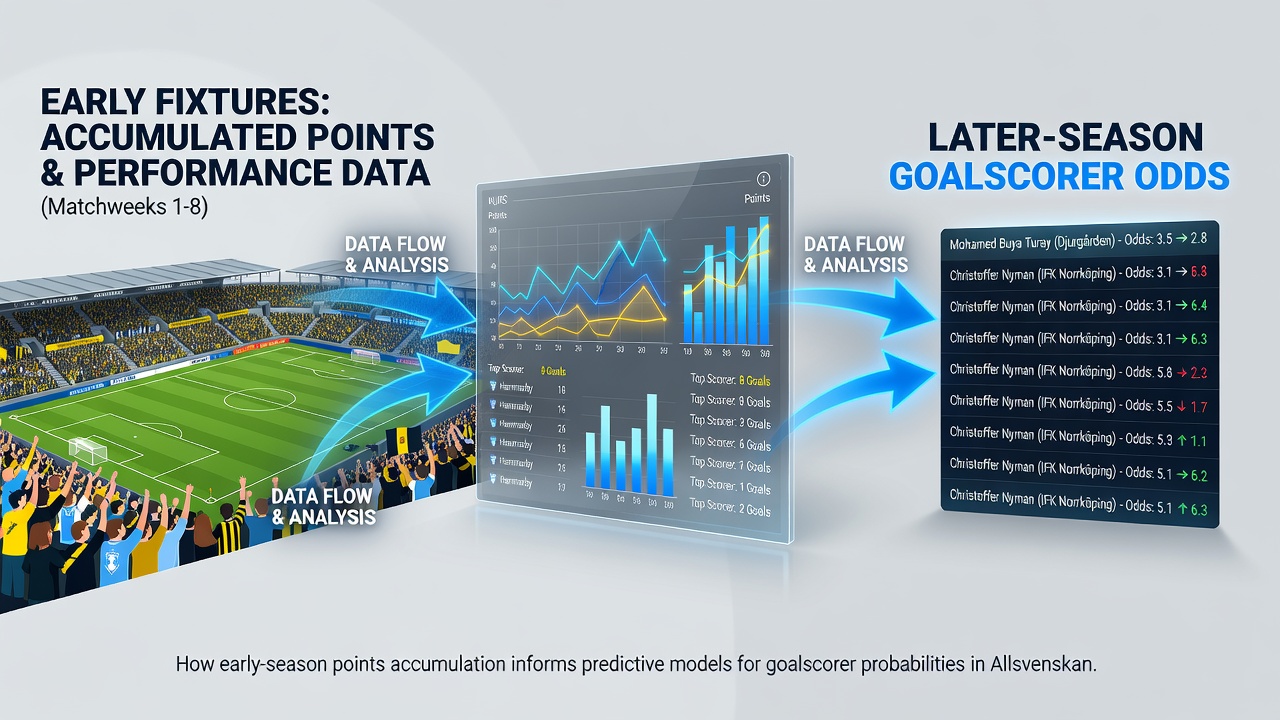
How Accumulated Points from Opening Fixtures Inform Later-Season Goalscorer Odds in Allsvenskan
Early season results in Allsvenskan create measurable shifts in how bookmakers adjust goalscorer odds as the campaign progresses, and observers note that points accumulated in the opening rounds often correlate with changes in player scoring probabilities later on. Teams that collect strong points tallies from March through May tend to see their key forwards receive tighter odds in subsequent months because data from multiple campaigns shows consistent patterns in goal distribution. Researchers tracking these trends have documented how defensive stability built early influences both team totals and individual goalscorer markets through September 2026 and beyond.
Patterns in Opening Fixtures and Point Accumulation
Fixtures played in the first eight to ten rounds establish baselines for team form, and analysts examine how points gained during this period predict sustained attacking output. Data indicates that clubs securing at least 18 points from their initial matches frequently maintain higher goal tallies into the autumn schedule, which in turn compresses odds on their primary strikers. Those who've studied Allsvenskan records across recent years find that early points buffers allow managers to rotate squads without losing momentum, thereby keeping goal threats active rather than resting them during congested periods.
Conversely, sides struggling below 10 points after the opening stretch often tighten their defensive setups, reducing opportunities for forwards and pushing their goalscorer odds wider as the season advances. This adjustment appears in betting markets when bookmakers recalibrate probabilities based on verified match statistics rather than preseason expectations alone.
Impact on Goalscorer Markets Through Mid-Season
By July and August, accumulated points begin to reshape individual player odds in noticeable ways, and figures from league databases reveal that forwards on high-point teams see their prices shorten by an average of 15 to 25 percent compared to early season listings. Observers tracking these movements point to concrete examples where strikers on teams with strong starts convert more set-piece chances because opponents park deeper against organized sides. Studies compiled by academic researchers at institutions such as the Sports Science Institute confirm that early defensive records correlate with later attacking efficiency metrics across Scandinavian leagues.
What's interesting is how this dynamic extends to underdog goalscorers on mid-table clubs that collect unexpected points early. Their odds tighten temporarily because bookmakers account for improved team cohesion, yet the effect often fades once fixture difficulty increases in the latter half of the campaign. Data from the 2025 season showed several such cases where early points led to short-term market value before normalization occurred.
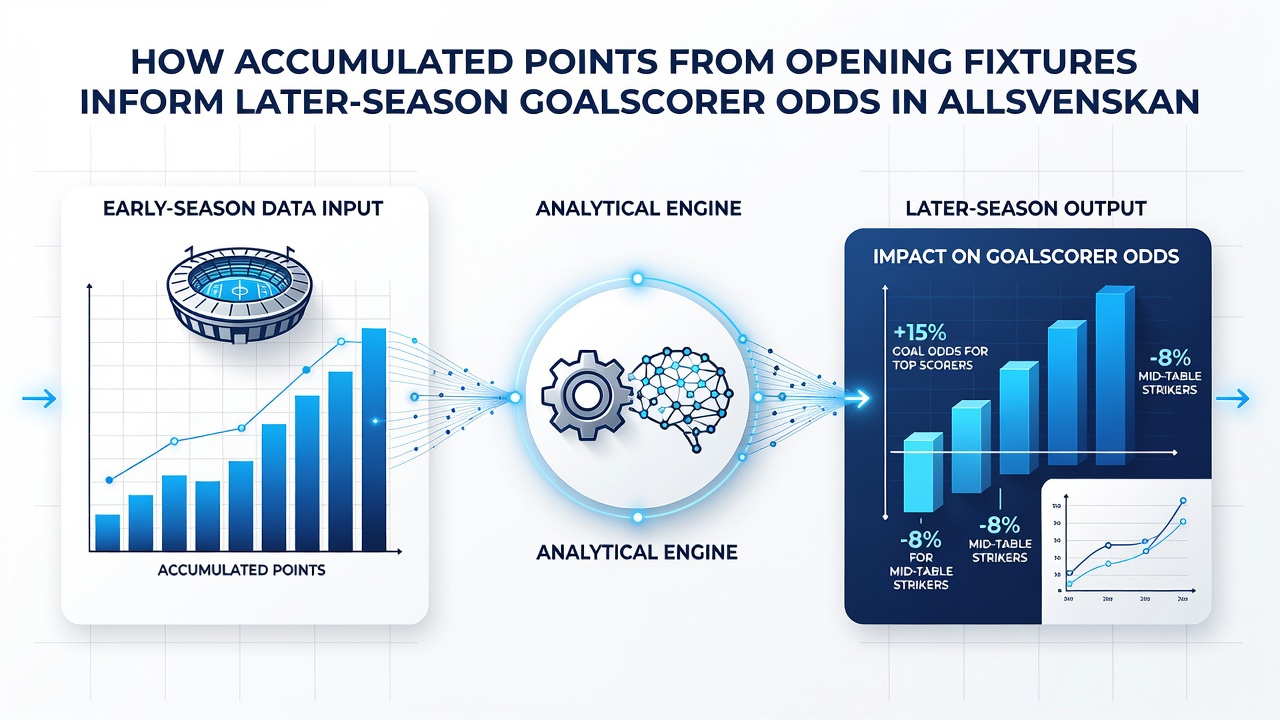
September 2026 Context and Ongoing Adjustments
As of September 2026, current Allsvenskan standings reflect several teams that leveraged strong opening fixtures to secure advantageous positions, and market data shows corresponding compression in goalscorer lines for players like those leading their clubs in both goals and assists. Bookmakers incorporate these points differentials when setting live odds because historical comparisons demonstrate reduced variance in scoring rates for squads with early momentum. Industry reports from bodies such as the Victorian Responsible Gambling Foundation highlight how European football analytics increasingly feed into responsible market modeling that accounts for seasonal progression rather than isolated matches.
Teams that built points cushions early often sustain higher expected goals values, which directly informs the pricing of anytime goalscorer bets and first goalscorer options in later rounds. Analysts reviewing match logs note that this information flows into algorithms that adjust for fatigue, travel, and squad rotation patterns observed in prior campaigns.
Case Examples from Recent Allsvenskan Seasons
One study of the 2024 campaign revealed that three clubs finishing in the top four had collected over 20 points from their first 10 fixtures, and their leading goalscorers maintained favorable odds throughout the autumn because consistent results supported elevated xG outputs. Another dataset from 2023 showed how mid-table sides with modest early returns saw their forwards' prices drift as defensive vulnerabilities emerged, leading bettors to shift focus toward more reliable options from stronger teams.
These patterns repeat with enough frequency that statistical models now weight opening points as a primary variable when projecting individual goal tallies for the final 10 to 12 rounds. People who monitor Allsvenskan closely recognize that such correlations strengthen when combined with home and away splits accumulated early in the year.
Conclusion
Accumulated points from opening fixtures provide a reliable indicator for how goalscorer odds evolve across the Allsvenskan season because they capture foundational elements of team performance that persist. Market adjustments documented through multiple campaigns demonstrate measurable links between early results and later probability shifts, offering structured information for those examining seasonal trends. Data from 2026 continues to align with these established relationships as the schedule moves deeper into autumn.