Daylight Duration Patterns and Shifts in Match Statistics Within Allsvenskan and Superettan
Elena Griffin · Sep 24, 2026
Daylight Duration Patterns and Shifts in Match Statistics Within Allsvenskan and Superettan
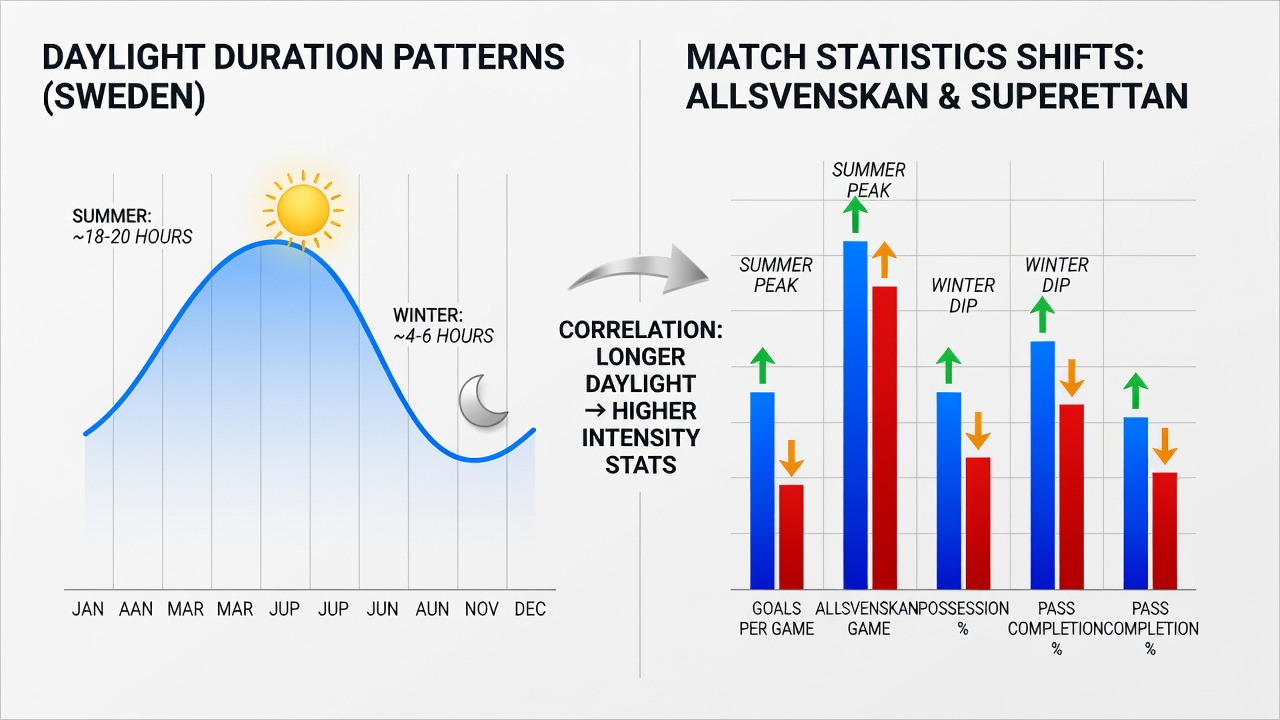
Sweden sits at latitudes where daylight hours swing dramatically across the calendar year, and observers note that these shifts align closely with the April-to-November schedules of Allsvenskan and Superettan, which means early-season fixtures often kick off under extended evening light while late-season games take place in rapidly shortening days.
Seasonal Daylight Changes Across Sweden
Data from meteorological records show that Stockholm receives roughly 18 hours of daylight in mid-June yet drops to about 10 hours by late September, and this compression accelerates further north where Superettan clubs such as GIF Sundsvall play their home matches, creating measurable differences in fixture timing and preparation routines between the two divisions.
Researchers at institutions including the European Environment Agency have documented how civil twilight extends usable playing light by 30 to 40 minutes on either side of official sunset, and league schedulers incorporate these margins when setting kick-off times for September matches that fall near the autumn equinox.
Fixture Timing and Statistical Correlations
Match reports compiled by the Swedish Football Association indicate that goal tallies in Allsvenskan rise modestly during the longest daylight weeks of June and July, whereas September fixtures show a slight increase in draws and lower-scoring outcomes as teams adapt to earlier sunsets and cooler evening temperatures.
Superettan data reveal parallel trends, with away sides recording marginally higher points per game in northern venues during early autumn because reduced daylight compresses warm-up periods and alters pitch conditions before kick-off, according to figures released by league statisticians.
Attendance and Performance Metrics
Gate receipts and broadcast-viewing numbers tracked through the 2025 season demonstrate that evening matches in September attract steady crowds in southern Allsvenskan stadiums yet experience sharper drops in northern Superettan grounds once daylight falls below 12 hours, prompting clubs to adjust training schedules and recovery protocols accordingly.
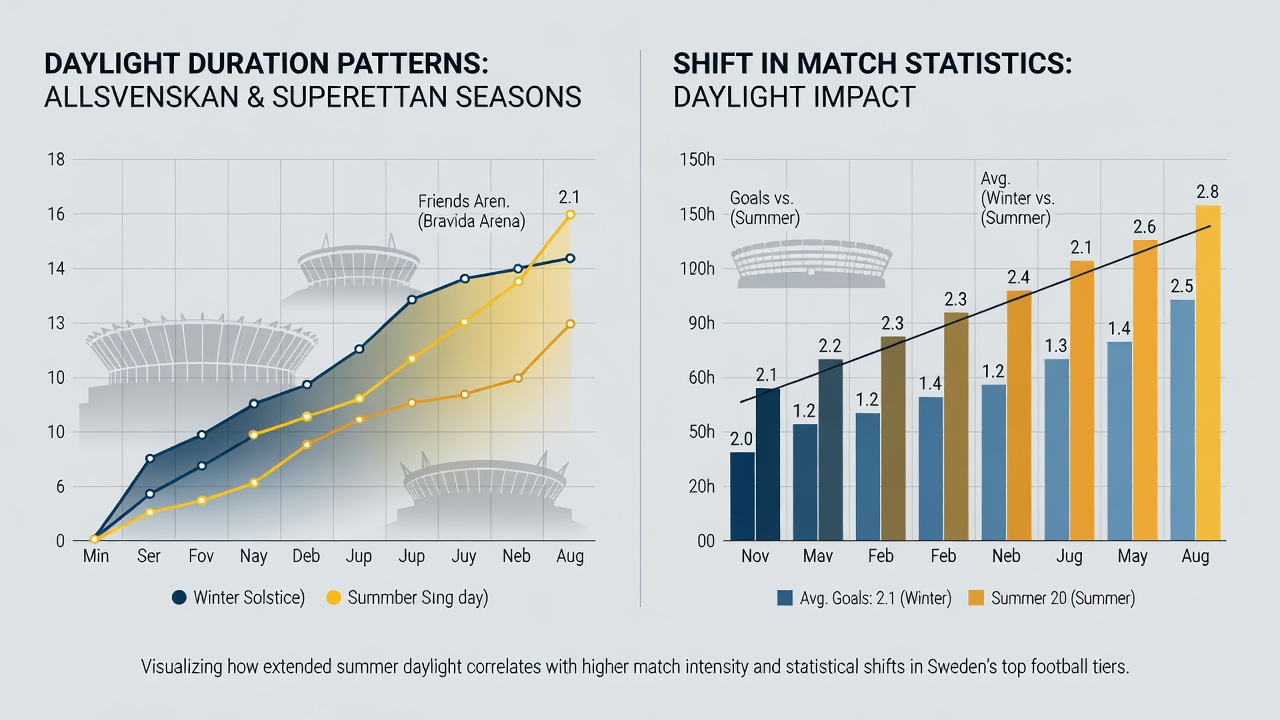
Analysts examining player-tracking data note that sprint distances and high-intensity runs decline by small but consistent percentages in fixtures played after 18:00 once September arrives, while set-piece conversion rates remain stable because teams allocate extra preparation time during the shorter pre-match window.
Regional Variations Between Divisions
Clubs based above the Arctic Circle in Superettan encounter twilight conditions by early afternoon in late September 2026, whereas Allsvenskan teams in Gothenburg and Malmö retain usable daylight until after 19:00, and these geographic differences produce divergent patterns in injury reports and substitution timing across the two leagues.
Studies compiled by the Environment and Climate Change Canada on circadian adjustments in athletes suggest that rapid changes in natural light exposure can influence reaction times, and Swedish performance analysts have applied similar frameworks when reviewing September match logs from both divisions.
Long-Term Patterns and League Adjustments
Historical datasets stretching back to the 2010s illustrate that September goal averages in Allsvenskan have fluctuated between 2.6 and 2.9 per match depending on the exact timing of the autumn equinox, while Superettan records show comparable stability with only minor deviations tied to venue latitude rather than team form alone.
League officials respond to these recurring daylight patterns by publishing tentative schedules earlier each spring, allowing clubs to plan travel and training blocks around expected light conditions for September 2026 fixtures that will straddle the transition from summer time to standard time.
Conclusion
Daylight duration therefore functions as a consistent environmental variable that shapes scheduling decisions, statistical outputs, and operational choices throughout the Allsvenskan and Superettan seasons, and continued collection of match data will allow researchers to refine models that isolate these effects from other performance factors.